
Jongmyo Jeongyo Bridge (King’s Road)
Jongmyo
Transcript
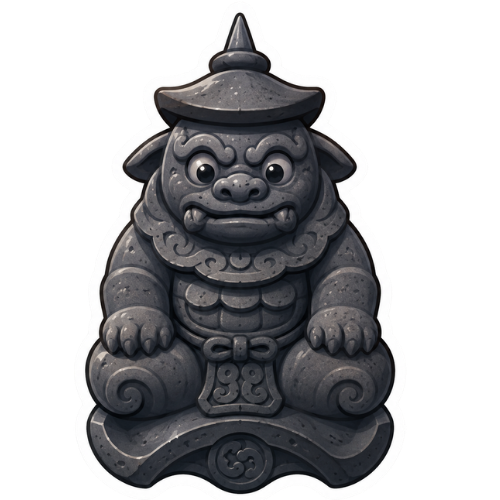
Jongmyo Jeongyo Bridge (King’s Road) When Jongmyo Park (Jongmyo Square) was restored, a bridge appeared for the first time. It is “Jongmyo Jeongyo (King’s Bridge)” that you see in front of you. In the Joseon Dynasty, a small stream flowed in front of Jongmyo. During King Sejong’s reign, an artificial embankment was built to turn the waterway and prevent the stream from flooding. And, to enable people to walk over the new water route, a brand-new bridge was installed, which was Jongmyo Jeongyo. Since the royal palanquin and procession had to pass over this bridge, it was much wider than other ordinary bridges. When it was first installed, it was made of wood but it was rebuilt as a stone bridge in the 3rd year of Sejong’s reign (1421) and then improved in the 4th year of Hyeonjong's reign (1663). This bridge is clearly marked in <Juncheonsasil> produced in 1760 and <Daedongjiji> made by Gim Jeong-ho in the 1860s. But, in the 1920s during the Japanese occupation period, a construction project proceeded in the Jongmyo area to repair the sewerage, which ended up burying the bridge and stream underground, no trace of the bridge had been found until recently. Through the excavation survey conducted in 2010, the stylobate of Jongmyo Jeongyo and stonework by the stream were discovered and eventually restored after records and on-site checks. Although it was difficult to figure out the exact shape of the bridge from maps and images that still remain, a scene of installing Eodo, or the road through which the king's palanquin passed, was reproduced by referring to Eodo and Sindo in Jongmyo. On four corners of the bridge, Hwapyoju (pillars set up where a tomb is) were erected with the face of Haetae engraved on each of them. On the king's road to Jongmyo, there is a well that the kings supposedly drank from. Shall we walk over the bridge to get to our next destination?