
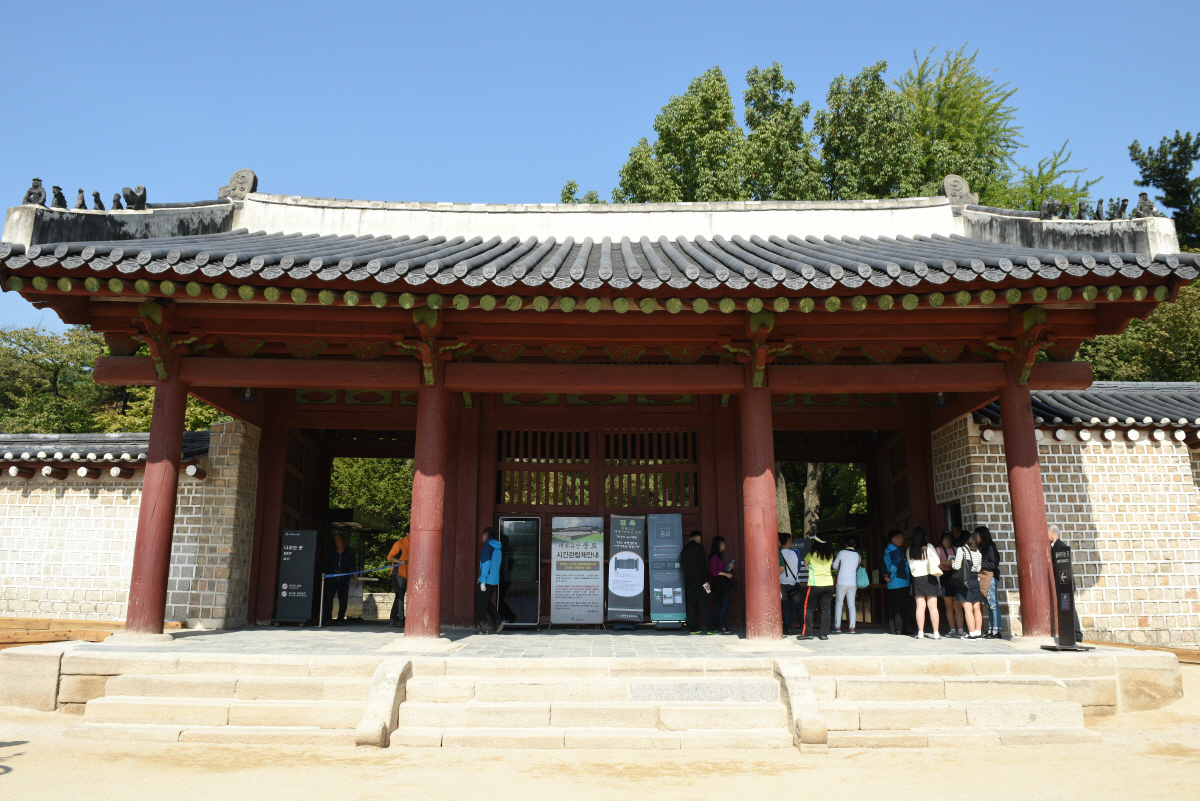
Entrance of Jongmyo
Jongmyo
Transcript
Jongmyo Shrine, a fascinating UNESCO World Heritage Site, is a Confucian shrine established to honor the royal ancestors of the Joseon Dynasty. The shrine is one of the first state institutions built in 1392, when Yi Seong-gye, the founder and first king of the dynasty, moved his dynasty's capital to Hanyang, today's Seoul. The Joseon Dynasty adopted Confucianism as the state ideology largely for its emphasis on loyalty and filial piety. Jongmyo Shrine is where Jongmyo Jerye, or the Royal Ancestral Rite, is performed to commemorate the life and legacy of the Joseon kings and their queen consorts. Located at the heart of Seoul, the Jongmyo Shrine has been a symbol of the 500-year history of the Joseon Dynasty. Even today, the shrine is regarded as one of the most important heritage sites representing the great Confucian tradition the dynasty developed and maintained. Similar legacies were preserved in Asian countries with Confucian traditions, such as China and Vietnam, but it is only at the Jongmyo Shrine that the original memorial ritual is still held today by the descendants of the royals whose spirit tablets were enshrined. The shrine covers a site seven times larger than a soccer field and consists of several buildings, including the two main shrine buildings: Jeongjeon, or the Main Shrine Hall, and Yeongnyeongjeon, Hall of Everlasting Peace. Upon entering the shrine's gate, you'll notice a paved path called Samdo, or Triple-lane Road. This path was exclusively used during the ancestral memorial rite by the king and the crown prince, who walked the eastern and western lanes, respectively. The central lane was reserved for the royal ancestral spirits, whose mortuary tablets were housed in the shrine, and the chief ritual officiant carrying incense to the shrine. In addition to the shrine, the memorial rite regularly held at the shrine and the music and dance performed for the rite were also proclaimed by UNESCO as Intangible Cultural Heritage of Humanity.